DOGS

DSCF0590

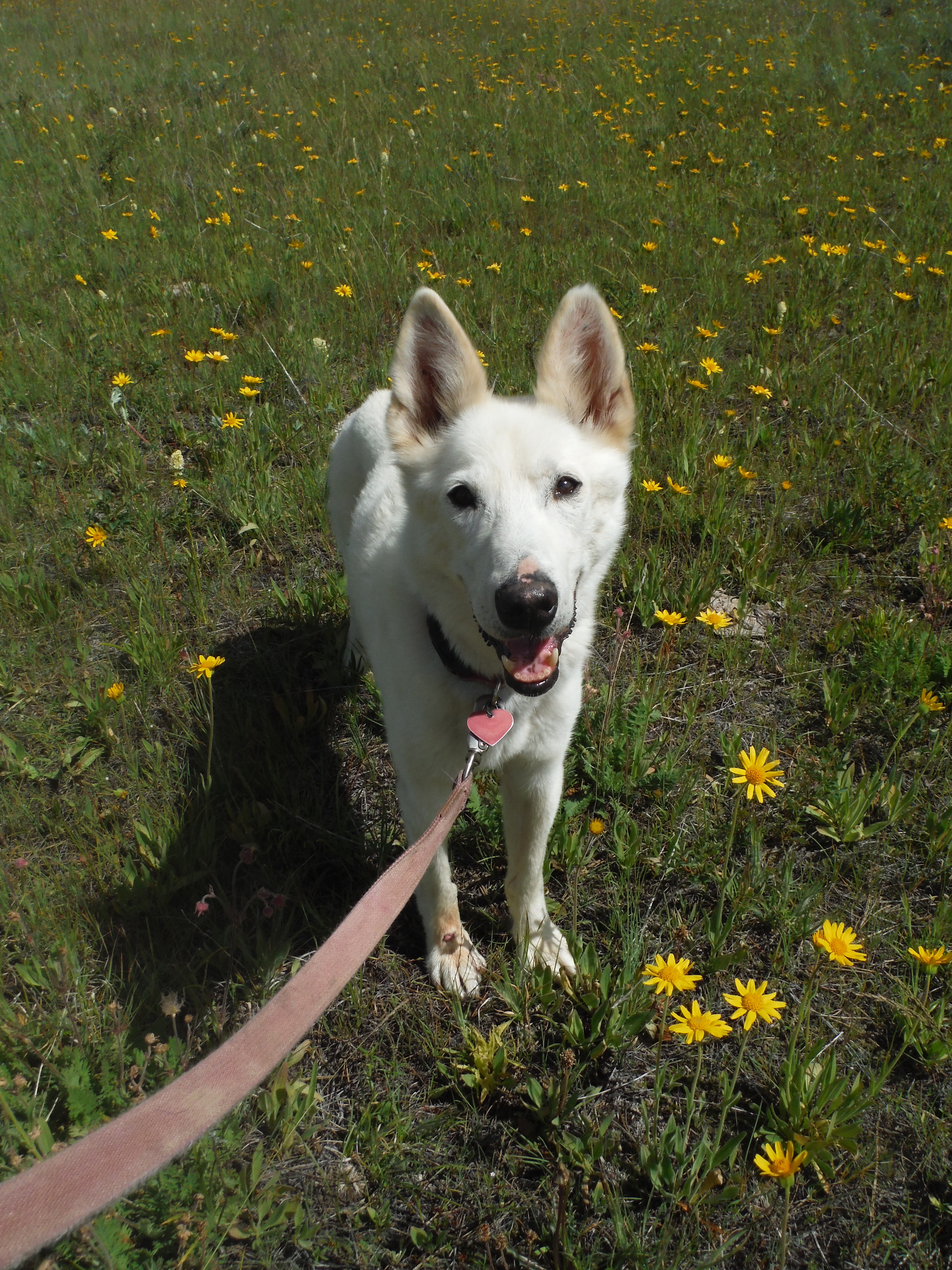
On Monday, I took Lolo to the veterinarian. My instinct tells me that my 14-year old retired Iditarod lead dog is not “sick”, but continues to mourn the loss of her companion, Borage. And that her vomiting, acid reflux, and loss of appetite stem from grief and loneliness, not cancer or some other physical disease. Monday morning wasn’t much different than any other since I returned to Martinsdale 3 weeks ago — I fed Lolo just a small amount, she ate, howled for 20 minutes straight, and then vomited her breakfast back up. She looked miserable standing there in the front yard with her head hung low — so alone, and now so sick. I couldn’t put it off any longer. I needed an expert to confirm my diagnosis.

DSCF0269I recognize the symptoms of a broken heart. In the last two years, I’ve lost both of my parents; my good friend and mentor, Carol Meeks; and my dog, Borage. I, myself, have struggled with a long list of ailments such as disturbing heart palpitations, interstitial cystitis, acid reflux, abdominal pain, ulcers, weight loss. These are real medical conditions causing great discomfort. And I won’t deny that I often feel sad, anxious, and alone just like Lolo does. But how do you separate despair and disease? Thankfully, I have the human ability to talk it all through with medical doctors and therapists, and then come up with a plan that can be adjusted along the way. But how do you help a grieving animal?

In my parents’ living room in Indianapolis, a framed print hangs above their couch depicting a dog greeting passengers unloading from a train. My parents loved dogs, trains, and Montana so when we visited Fort Benton in 2001, all three of us were drawn to the story of “Shep.”

According to historians from the Overholser Historical Research Center and the Missoulian, “Shep first appeared in Fort Benton in August 1936 when his owner, an area sheepherder whose name has been lost to history, was brought mortally ill to the St. Clare Hospital. After the sheepherder passed, his body was sent by train to his family back east. Shep was left behind, but for the next 5 1/2 years he lived under the platform of the Fort Benton train station, patiently waiting for his long-dead master to return.”DSCF0555

I think of “Shep” now as I watch Lolo out in the yard, pacing back and forth in front of the gate. The day I realized it was time to end Borage’s suffering and put him to sleep, my lifelong friend (and veterinarian), Dr. Shannon Kiley, suggested that I bring Lolo with me so she could see and smell his body before they took him away. We all knew Lolo would be lost without Borage, but we hoped this might help. I did as Shannon said and allowed Lolo to sniff her mate’s thick fur for one last time.

Sometimes witnessing the death of a loved one still isn’t enough proof that he or she is truly gone. I often wake in the mornings and feel for a brief moment that my parents and Carol and Borage are still here. For humans and dogs, long-term grief thrashes the body with highs and lows. One minute I might finally feel some peace — but then out of nowhere sadness slams me hard from a new direction. I cry. Lolo howls. Sometimes we do it together.

Dr. Katherine Parks, my Montana veterinarian based in Harlowton, declared Lolo to be in amazing physical shape for a 14-year old dog. “She’s so nervous, yet her heart rate is really low,” Dr. Parks noted, impressed with the athletic physiology of Alaskan Husky sled dogs. The thorough exam revealed nothing — the blood work came back perfect. “I would start her on a famotidine for her stomach acid problem. And for her nerves, you could try some anti-anxiety meds. Or try to find her a new friend,” Dr. Parks suggested. “One or all of these things might help… or not.”

DSCF0511In other words, you can never replace a loved one. But for me, continuing to live means continuing to try — I’m not giving up on Lolo. I cry. She howls. We both take Pepcid twice a day. And then we take a hike… our doctors’ orders.

Chloe (left) and Jigs lead the 2014 summer solstice hike up Pasture Gulch.

Chloe (left) and Jigs lead the 2014 summer solstice hike up Pasture Gulch.

In August 2011, I stopped letting Borage, Jigs, Chloe, and Lolo run free. To many, this might not seem like a big deal. Deciding to walk your dogs on leashes instead of allowing them to run wild… who cares? But in my life, the decision to restrain my dogs, snapping long extended leads to their collars before each and every hike, marked a major shift in how I navigate life. It all boiled down to one emotion — fearI was terrified. That summer, both of my parents were dying in front of me. Together, we had already endured a year of cancer, but nothing was going right. Surgeries, chemotherapy, radiation, infections, middle-of-the-night ER visits — if one more bad thing happened to someone I love, I feared I wouldn’t be able to take it.

Lolo, my once-Iditarod-lead-dog, now slinks  along close behind me as my white shadow.

Lolo, my once-Iditarod-lead-dog, now known as my white shadow.

I could be my parents’ constant caregivers, but I could not stop disease from ravaging their bodies. I longed for control — of anything. By making my dogs walk close at my side, I could prevent them from getting lost in the woods or hurt by a wild animal. I could keep them from being swept away by a swollen river. Before my parents became ill, one of my main joys was allowing my dogs to be dogs. I would arrive at a trailhead and open every car door, releasing them to the wilderness. Exploring forests, chasing critters, swimming in clear Montana waters — for 20 years, I cherished those pure moments with all of my dogs (Kirby, Rosa, Adeline, Borage, Jigs, Chloe, Lolo… and dozens more sled dogs).

Knowing what I now know, how do I go back? How do I calm the what if’s? How do I let go of those I love? I think, just maybe, some of the answers might be in the dogs themselves. Jigs, Chloe, and Lolo continue to drag me on down the trail, reminding me that life is not experienced in the later… but in the now. And that the best kind of love happens when you let go of the leash. Thankfully, they’re patient.

When I started this blog, my intention was to post something — a column, musing, photograph, video, etc. — every day. Knowing where my travels often take me, I knew it wouldn’t be wise to promise a daily entry. But I will always make my best effort. For the last two days, I’ve been without internet at my house. Electrical power, cell service, and internet can be “iffy” in Martinsdale. High winds knock out power lines. There are no cell phone towers in sight. Maybe the cold weather and snow up high had something to do with it? Naw, probably not, but when it snows in mid-June it sure seems like a good thing to blame your problems on… not that being out-of-the-cyber-loop is a true problem. And, no matter the season, I LOVE snow! So all is well.

Chloe says, "How many times do I have to hear this???"

Chloe says, “How many times do I have to hear this???”

Although, Chloe does seem bored by my decision to write (indoors) instead of walk (outside) in the chilly rain/hail/snow. I took a break from the memoir-writing to work on a piece of short fiction, and I’m enjoying it. I can’t say the same for Chloe — when I write, I read everything out loud over and over again. If Chloe’s snoring is any indication of my foray into fiction, I’m in real trouble.

People have been asking about my decision on grad school, so I’ll give you a quick update here. Because of too many unknowns in my life at the moment, I decided to defer admission to the Iowa State University MFA program. The offer is very exciting, and the school has a one-of-a-kind “creative writing and the environment” focus, so going through the pros and cons of relocating (when I already have two houses 1800 miles apart to maintain) was challenging. But I do feel good about the decision. And it’s good to have an option in place for next year.

Since I applied for the traditional MFA programs way back in December, I’ve learned about low-residency MFA programs from several professional writers who have attended these schools. I am looking into this as another option which would allow me to write from anywhere (Indiana, Montana, Texas, Bolivia, you name it!). My desire is to write, and I want as much direct guidance as possible. I have heard these programs have an intensive focus on both the quality and quantity of writing put out daily, pushing and supporting writers through the entire book-making process. Most of these programs require students to come on site for 10 days to 2 weeks in January and July before the start of each semester (working year-round for 2-3 years depending on the program). During those hard-core workshopping sessions, the writer picks a mentor to work with for that semester (or for the entire program). After the writer leaves campus, they send in packets of work to their mentor. Most of the programs require at least 40 hours per week of writing to complete the MFA in 2 years. Right now I am looking at schools such as Stonecoast, Vermont College of Fine Arts, the Rainier Writing Workshop, and the University of Alaska. I am still researching all of these and more. Many of the programs have both fall and spring deadlines so I hope to get some applications in by September, and then, once again, wait and wait for acceptance letters (why not be optimistic?). Acceptances to these programs are just as competitive as the traditional MFA’s so I am aware I will need patience in the process. If I can get a short story completed by September, I might apply in both fiction and non-fiction. I also need to write a critical essay — I am reading Rick Bass’ “All the Land to Hold Us” right now, hoping to write about literature and a sense of place. It’s been YEARS (University of Montana, 1994) since I wrote an essay like this. We’ll see how it goes.

I began this blog a few weeks ago to help with my memoir-in-progress. I hoped writing quick “bits” about my relationships with my dogs, my parents, the outdoors, friends, etc. would help give me new direction. Writing about being a caregiver for my parents has been difficult. I miss them so much, and putting myself in front of a computer in their lifelong home to reflect on our last years together guts me… over and over again. I thought the blog would be a good change of pace. I wrote a column for the Great Falls Tribune in Montana for 10 years, and I loved it (thanks, Mike!). Coming here to a String of Dogs takes me back to those column-writing days. And it feels like home. I thank YOU for reading!

... or is it Big Sky country?

… or is it Big Sky Country?


Somehow we’ve made it through one entire week back home in Montana without any major “Jigs incidents” — knock on wood. For Jigs, making it 7 days in a row without getting sprayed by a skunk or tangled up with a porcupine or stepping on a rattlesnake is a major miracle. My good fortune so far has little to do with Jigs’ improved behavior, and more to do with the fact that I’ve been hiking with him on a leash. But today, no extendo-lead was going to protect me from my terrier’s favorite Montana activity. When Jigs spots a steaming cow patty on the trail (before I do) he lunges straight towards it, ducking his head and somersaulting into the watery pile with the same enthusiasm as a teenager cannon-balling into a swimming pool. And he doesn’t stop there. He squirms back and forth on his back until his wiry coat has completely absorbed the soupy flop. When he finally stands up, the cow dung quick-dries in the wind, leaving my cuddly bedmate encrusted from head to toe. This is nothing new — I know this about Jigs — yet my time away dampened the stinking memory. After needing to give Jigs two hose-downs in one day, it’s all come back to me now. Montana is Big Cow (Pie) Country…

DSCF0128

A meadow muffin-maker takes a siesta.


Thanks, Doug!

Thanks, Doug!

I’m devoted to my 1999 Toyota Rav 4 (a.k.a. “Ravioli”). The vehicle — basically just a big dog crate on wheels — has delivered my string thousands of miles across this country. Yesterday morning after I stacked my belongings and 3 dogs in their usual places, I popped the hood for a quick check of the fluids. I was horrified to discover an empty coolant reservoir. WHAT NEXT? I thought, knowing better than to say it out loud — I didn’t really want an answer. I dialed up Ravioli’s “doctor” and, as always, he answered the phone. “What’s up?” Doug said, knowing I must be stuck somewhere with a sick car. When I’m broken-down on the road, Doug rescues me with his knowledge by phone; when I’m stalled-out in Indiana, he’ll come looking for me. Thankfully, yesterday I could drive the Ravioli straight to his house for a consult. It didn’t take him long to find the problem, mend it with radiator stop-leak, and send us on our way. As I merged onto Interstate 74 WEST, I glanced down at my odometer, catching the numbers as they rolled to 266000. I love my little Ravioli…

Mom, Dad, Grandpa Land, and Aunt Dot ready to drive WEST. Indianapolis, 1967.

Mom, Dad, Grandpa Land, and Aunt Dot ready to drive WEST. Indianapolis, 1967.

In the last 21 years, I’ve driven back and forth between Indiana and Montana over 40 times (I lost count). To give my Iditarod presentations, Borage, Jigs, and I traveled over 30,000 miles a year by car, ricocheting from state to state like a steel marble in a pinball machine. When it was time to go, it never took me long to gather a few belongings (that’s all that fits in a Toyota Rav with 2 to 4 dogs), and pack the vehicle. When I departed from my parents’ house (which was often — I loved spending time at home), my dad would appear in the driveway with a bottle of windex and paper towels. He carefully washed the inside and outside of the glass, backing up to search for missed streaks. It took forever to get out of the driveway. We took photos. Both Mom and Dad petted each of my dogs… and kissed them… and said, “Behave yourself. Listen to your mother…” My mom always cried (even if I’d be back in a few days), insisting on not just one hug but several. Dad stood back and waited for his embrace. To the both of them, I said, “I love you.”

Mom, Borage, Jigs (he's in the car), and I leaving for 2 weeks of talks in Texas.

Mom, Borage, Jigs (he’s in the car), and I leaving for 2 weeks of talks in Texas.

Nowadays, leaving is hard. I dread pulling out of the driveway knowing that if I look back over my shoulder neither of them will be there. No one will be standing on the blacktop waving goodbye, not moving until my car fades from sight.

People often say, “I hate good-byes…” But when I think of all the love wrapped up in a parting — whether a brief or lifelong separation — I wouldn’t trade those moments for anything. Whenever I have a chance, will say, “Good-bye…” No matter where they’re headed, I want to send my loved ones off like they’re boarding a giant ship and heading out onto unknown waters. And, like my parents taught me, I’ll wave until their vessel disappears.

Mom telling Borage to BEHAVE

Mom telling Borage to BEHAVE