Montana

IMG_7459

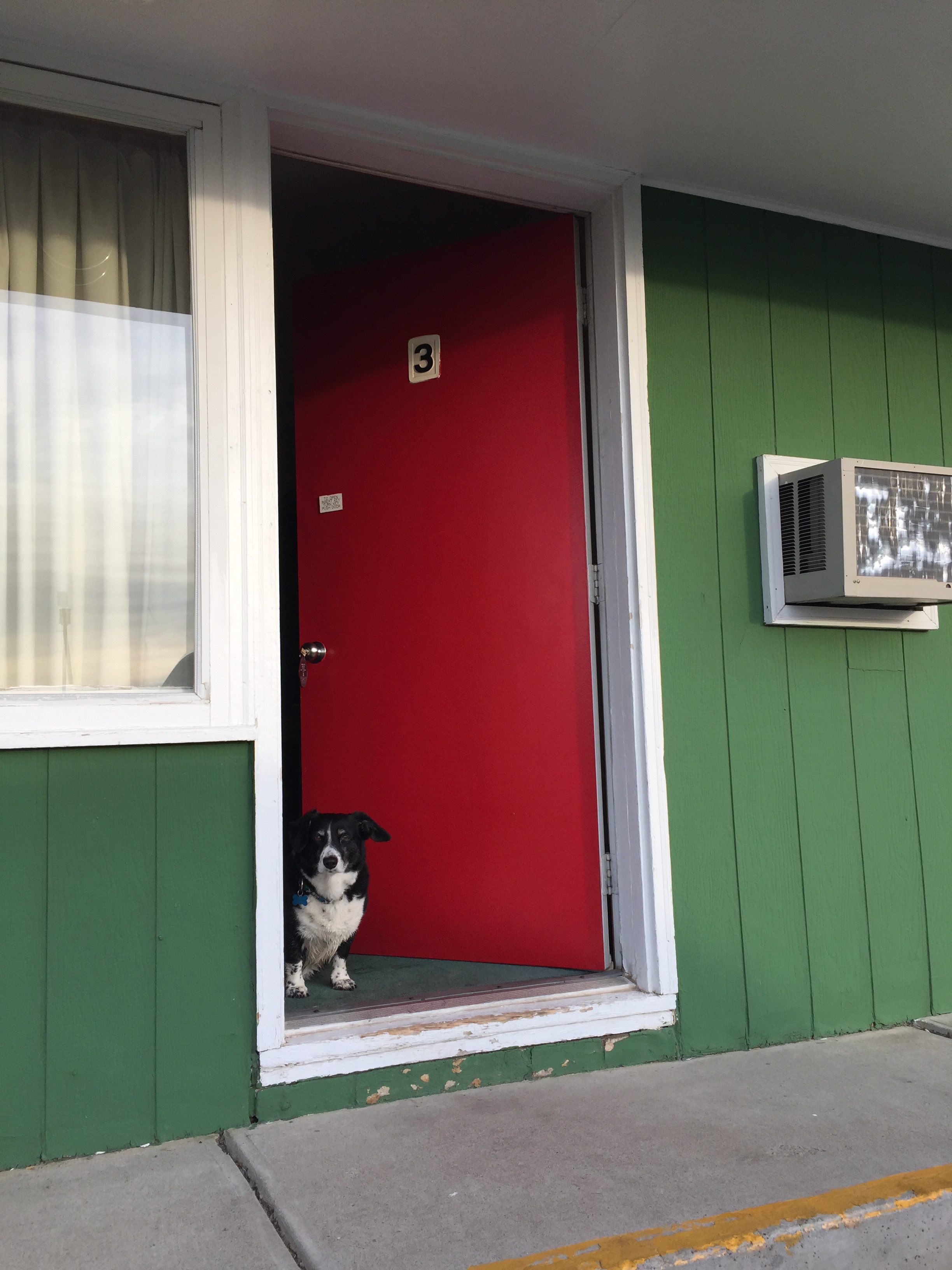
Chloe enjoys the view from our favorite motel.

I first stopped at Welsh’s Motel in 1993 on my maiden voyage west from Indiana to attend the University of Montana in Missoula. I met Mr. Wes Welsh that day, and ever since I have looked forward to his warm greeting and smiling face when I walk through the lobby door after a long day of travel. Time passes, and over the years I’ve driven this 1700-mile route 40-some times. This last June, though, Mr. Welsh was not there. When his daughter, Kelly, greeted me, I knew our Mr. Welsh was gone. Kelly has the same big, open heart and beaming smile of her father. Over the registration counter, we shared memories of both her dad and my parents (who had also stayed at Welsh’s over the years). We couldn’t help but cry. They were tears of painful loss but also much joy. We both know how fortunate we are.

I’m traveling west again soon. Headed to my “homes” in South Dakota, and then Montana. Home is where you share your heart. Thank you, Mr. Welsh, for sharing yours…

And Kelly, we’ll be seeing you soon.

1100830816-large

CAUTION! The Yukon Quest mushers and their teams are on the trail as we speak! The Yukon Quest, a 1000-mile sled dog race from Fairbanks, Alaska, to Whitehorse, Yukon began today. Follow the action at http://www.yukonquest.com.

Go Yuka Honda, Brent Sass, and Laura Neese!!! Happy Trails and Dogspeed…


IMG_5848 (1)

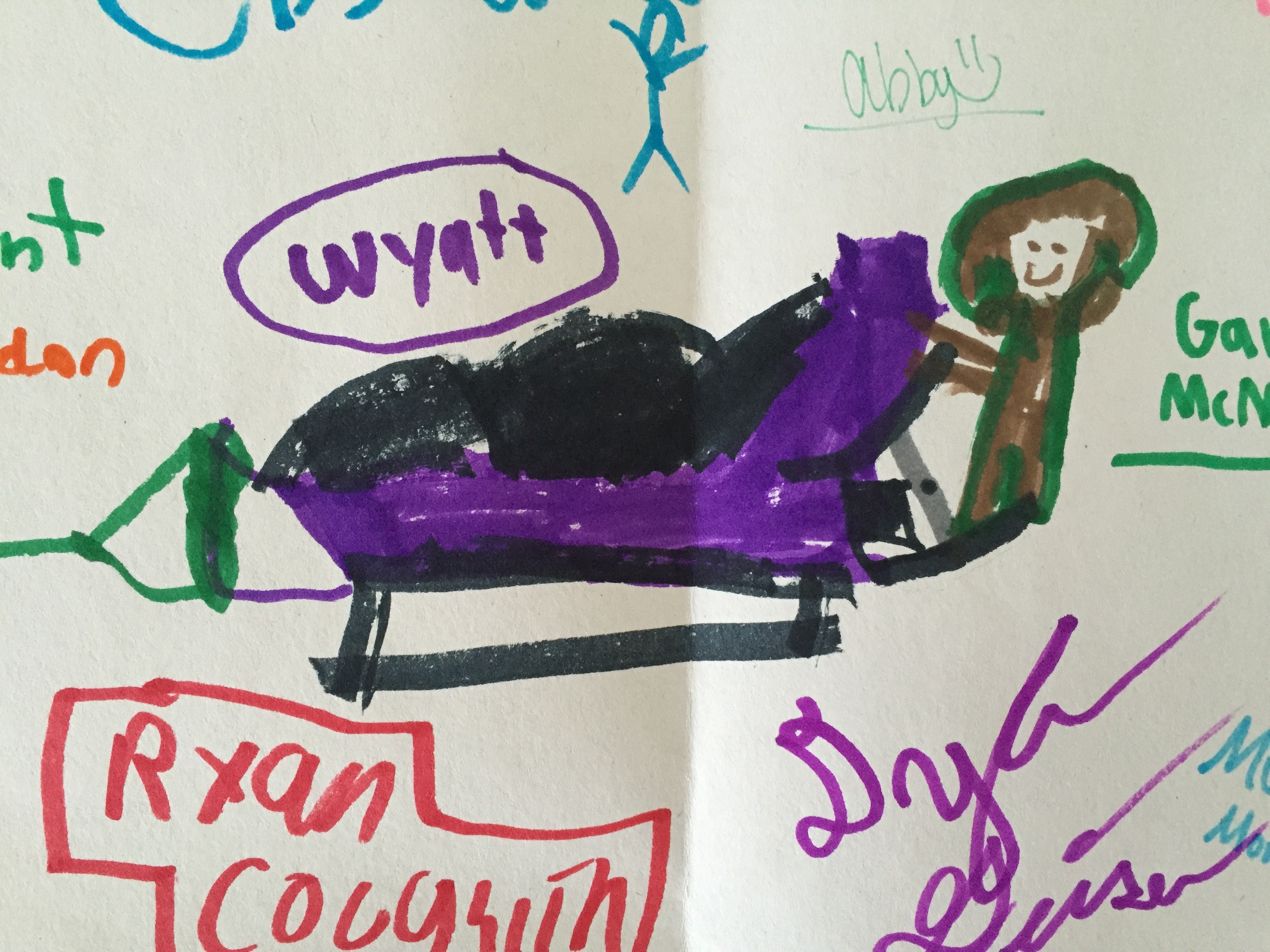
The details of the parts of the sled are VERY accurate!


Over the last 16 years, I’ve collected crates full of wonderful art made for me (and my dogs) by students from all over the United States. I try to hang as much as I can in my home but sadly I don’t have enough free space for each and every beautiful piece. SO I’ve decided it would be fun to post a few chosen ones on this blog! I will begin this IDITAROD ARTISTS series with a drawing I received in the mail a few weeks ago. The main artists are Ryan Coughlin, Brandon Harbin, Brennan Thoele, Nick Manning, and of course, the rest of the class at Tri-Valley Elementary in Downs, Illinois who signed this thank-you card. Thank you, I loved all of the cards you sent!

IMG_5850 (2)

I can’t get over how much this looks like Romano!!!


IMG_0282


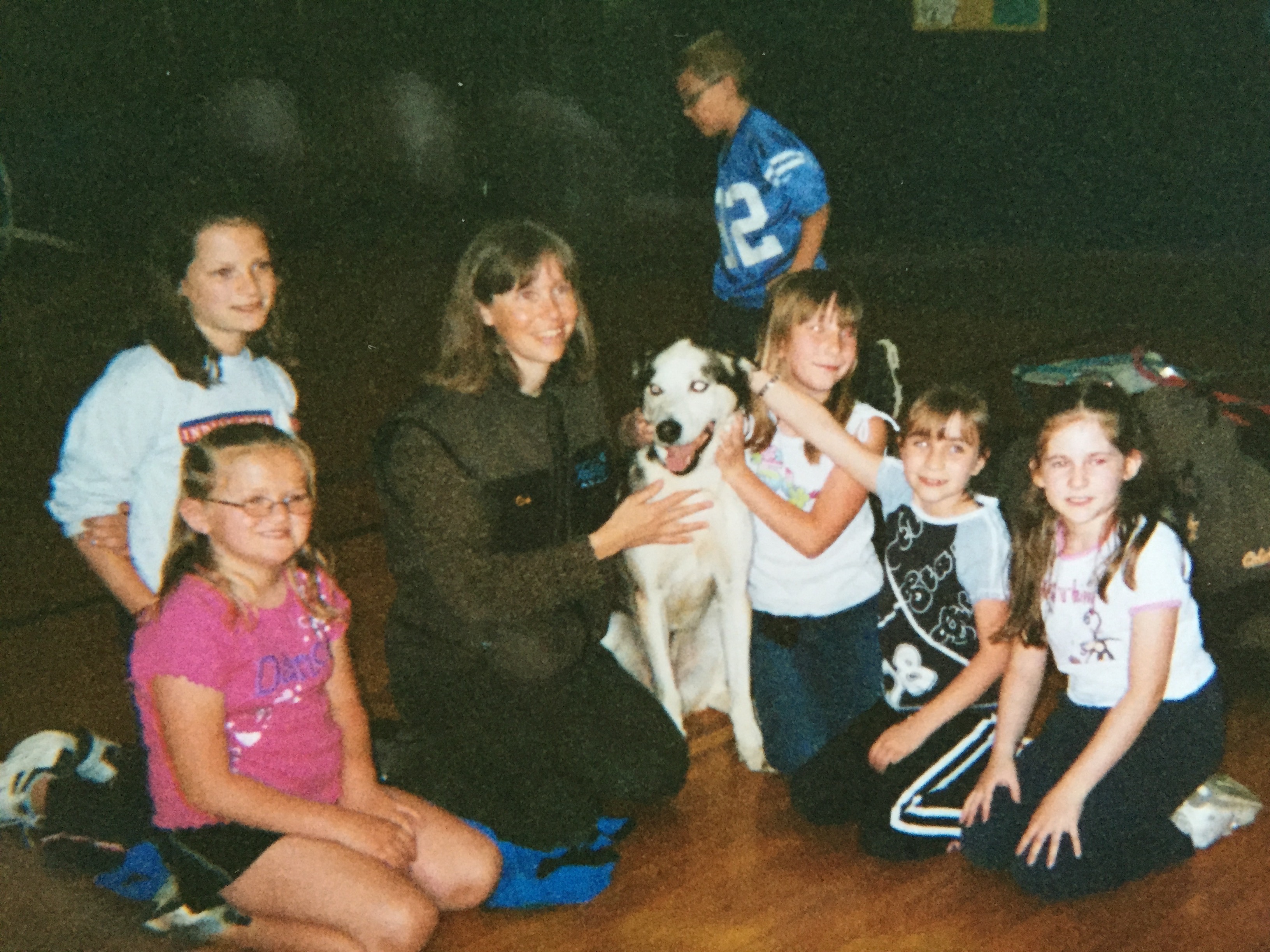
Borage, my beloved husky sidekick and business partner, back in his day… and me looking a little bit younger as well! I miss you, Borage.

2016 will be my 16th year giving Iditarod School Presentations across the country! Contact Karen and Romano now to get on the 2016 talk and/or Skype schedule…

ForrestTalk

Yes, there is a student somewhere under that Trans-Alaskan suit…

Thank you to Kate Walters and her dad, and the staff and students of Meadowbrook Elementary School in Forrest, Illinois for making Romano and me feel right at home! We really enjoyed our afternoon “talking mushing” with you. The students were an engaged, well-prepared (they knew all of the answers!), and perfectly-behaved audience. It was a fun day.

The Iditarod Sled Dog Race begins Saturday, March 5, 2016. If your school or library is interested in an Iditarod presentation or Skype session, email me now to get on the 2016 schedule. MUSH!

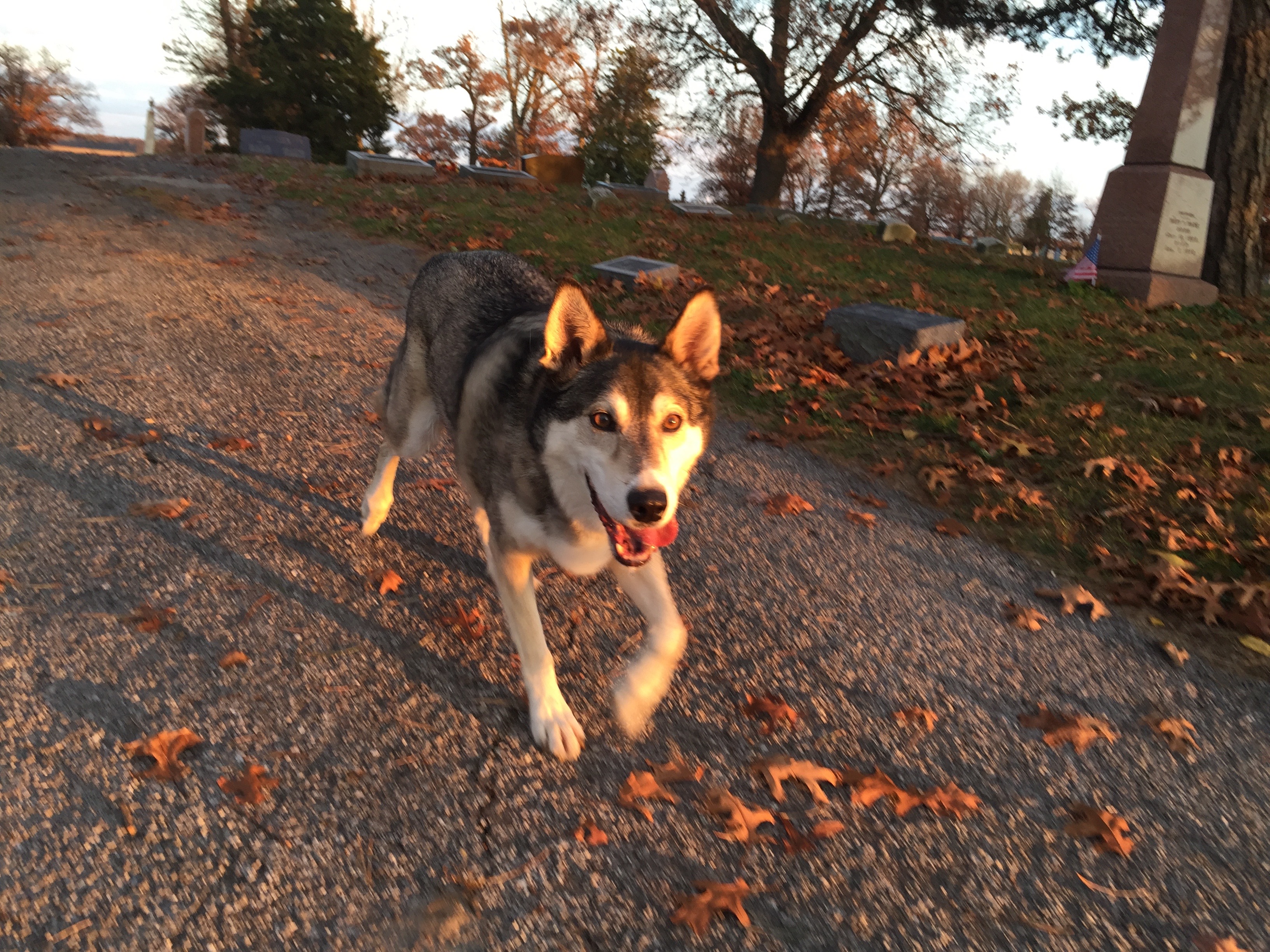
Romano enjoying a free run through the beautiful local cemetery after the talk.

Romano enjoying a free run through the beautiful local cemetery after the talk.

DSCF0311

By Karen Elizabeth Land — originally published on November 22, 2001 in “The Great Falls Tribune.”


Barn’s burnt down —

now I can see the moon.

~

— Mizuta Masahide,

17th century Japanese poet

and samurai


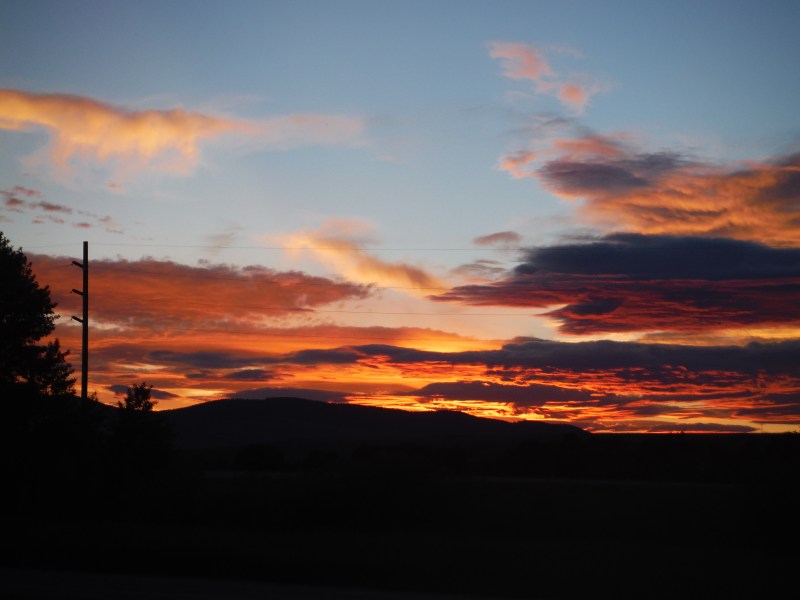
Witnessing the Montana sunset is a daily ritual for me. Usually as the sun slides behind the last rise, I am watering and feeding the sled dogs, tucking them in for the night. On September 11th, the beauty was overwhelming. The sunset seemed to last forever.

It is hard to imagine anything good ever coming from something so bad. I knew, on the other side of the country, the World Trade Center was burning. The pain and ugliness of the day weighed heavy in my mind as I went about my evening routine. It was the sunset that helped me to see the moment in a new light — a light both brilliant and reassuring. I became instantly aware of how beauty helps us heal and move forward.

We are lucky here in Montana. And I mean really lucky. Natural beauty is such a part of our lives that we sometimes forget it is all around us. We expect to see snow-peaked mountain ranges in the distance, shimmering fields of wheat, clear streams and herds of antelope grazing. I know I expect these things; that’s why I moved here from Indiana seven years ago.

Last week Borage and I returned to Indianapolis to speak in the schools about dog mushing and to attend an Iditarod fund-raiser that family and friends had organized for us. As soon as the news of the “girl dog musher from Montana” hit the media, my poor parents were bombarded with over 160 RSVP phone calls in just two days.

The residents of the city and suburbs were dying to hear and talk about dog mushing, Montana and Alaska, and “the wild.” Keeping my parents on the phone for hours, everyone seemed to be starving for the beauty that is our home here in Montana. They know wilderness exists here in our state and it seems to give them hope even if they might not ever run a team of sled dogs, hike the Bob Marshall, or float the Missouri River.

It was good to go back to Indiana and even better to come back home to Montana.

I have been back East dozens of times since I moved west, but this trip was different. I was reminded of my first pilgrimage to Montana seven years ago to attend school in Missoula. My rusted Chevy S-10 truck sagged under the weight of my entire life’s belongings, my two cats, and my dog Kirby. The beauty and endless space of Big Sky Country was exhilarating. I felt more alive than ever and so thankful to just be here.

Thanksgiving will have more meaning than ever this year. Sometimes it takes tragedy, ugliness, or a trip away from home to show us the beauty in our lives. In the natural world, aggression and darkness are always replaced with peace and light — I take comfort in this.

“The barn has burned down,” but all of us, anywhere in this world, can look up and see the moon.

crinoid

By Karen Elizabeth Land — originally published in “The Great Falls Tribune” and “The Kansas City Tribune,” July 2010.


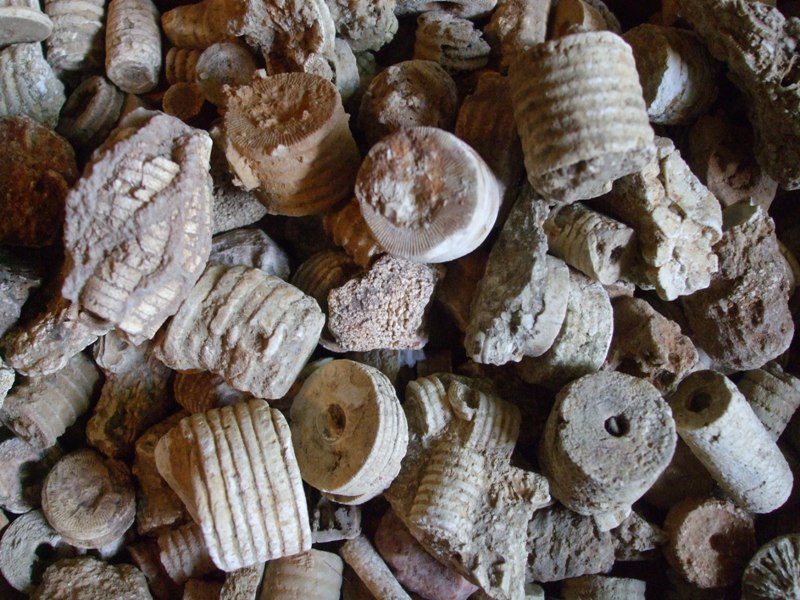
The small wooden treasure chest stored in my childhood closet holds a collection of fossilized sea animals that could be as old as 250 million years old. Whenever I’m home, I pull the heavy box from the shelf dumping the contents across my bedspread to find my favorites. My first few years out of high school, I was crazy about crinoids. I spent my days off of jobs at the local veterinary hospital and hardware store traipsing the shallow streams of southern Indiana with my dog, Kirby, searching for the columns of round “buttons.”

I know very little about fossils. But when I stumbled across my first crinoid while on a hike, I was drawn to their perfection. The stems of crinoids have a dependable shape; I trained my eye to find the fossilized discs interlocked tightly together like a stack of coins.

My crinoid collection wouldn’t wow the scholars. I have never found an entire specimen in 3-D relief. My treasure chest is full of bits and pieces – mostly chunks from the stems of individual crinoids. According to Crinoids and Blastoids by Susan H. Gray, ancient crinoids looked like flowers with roots, stems, and petals, but were actually sea animals that moved and gathered food. Thousands of different varieties of crinoids are now extinct, but several hundred still exist today. Modern crinoids, rarely seen by humans, are known as sea lillies and feather stars. All crinoids belong to the echinoderm group which includes modern animals such as sand dollars, sea stars, and sea urchins.

Indiana is a hot bed for spectactular crinoid finds. “The first crinoid calyx collected from the Crawfordsville, Indiana area was by 9-year old Horace Hovey in 1842, who was collecting ‘encrinites’ along the banks of Sugar Creek to sell,” www.fossilmuseum.net explains (and shows photographs of magnificently-preserved assemblages). When I pick a tiny fossilized stem from the siltstone, I can’t wait to get it home to show someone, anyone. I can just imagine young Horace’s excitement when he struck crinoid gold.

Crinoids became my specific obsession because they are one of the most commonly found fossils in the world. You can find crinoids everywhere – along roads, creeks, farmland, and mountainsides in many different states. The July 1953 addition of the Journal of Paleontology states, “thirty-two species of crinoids, distributed among 22 genera, are recognized in the Lodgepole (Mississippian, Kinderhookian) fauna of Montana.” This included the Little Belt Mountains, Big Snowy Mountains, and Tobacco Root Mountains.

Everytime my dog and I made the roadtrip to the dense forests of southern Indiana, I’d bring home at least a few fossils. We’d spend the day walking the watersheds, picnicing in the shade, and lounging in the grass, dozing off in the mid-day sun to the sounds of a rippling stream. My little treasure chest of fossils brings those memories rushing back. Fossils aren’t just about appreciating the vast and elaborate history leading up to “ME.” Searching for fossils is the perfect way to enjoy the present. Going on an outdoor adventure always puts me back into the place I need to be – the here and now.