
 .
.
 .
.

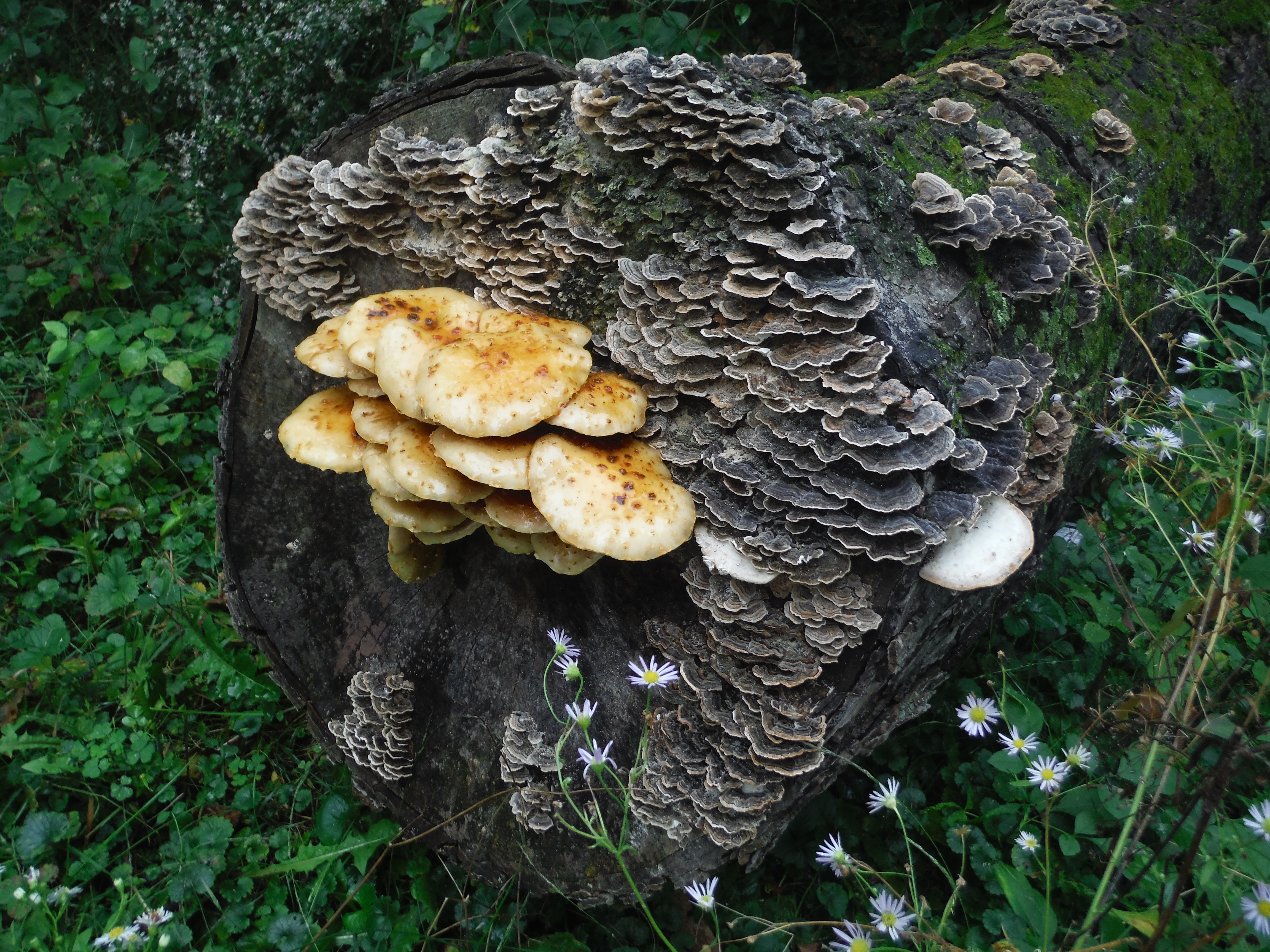
Koteewi Park, Strawtown, Indiana
 .
.
 .
.
 .
.
 .
.
 .
.
 .
.
 .
.
 .
.
 .
.


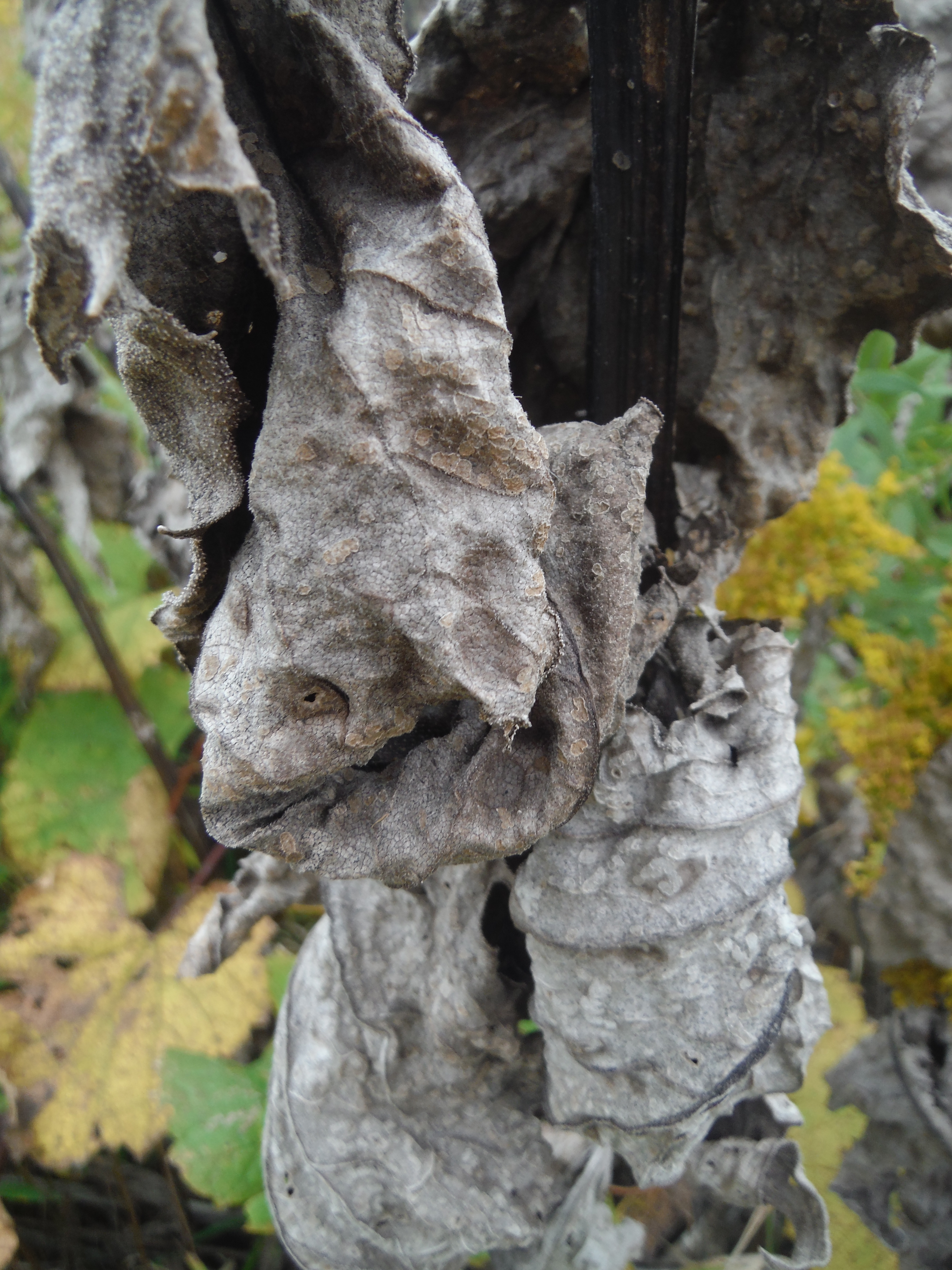
Koteewi Park, Strawtown, Indiana
 .
.
 .
.
 .
.


Because Jigs says so…


By Karen Elizabeth Land — originally published on November 22, 2001 in “The Great Falls Tribune.”
Barn’s burnt down —
now I can see the moon.
~
— Mizuta Masahide,
17th century Japanese poet
and samurai
Witnessing the Montana sunset is a daily ritual for me. Usually as the sun slides behind the last rise, I am watering and feeding the sled dogs, tucking them in for the night. On September 11th, the beauty was overwhelming. The sunset seemed to last forever.
It is hard to imagine anything good ever coming from something so bad. I knew, on the other side of the country, the World Trade Center was burning. The pain and ugliness of the day weighed heavy in my mind as I went about my evening routine. It was the sunset that helped me to see the moment in a new light — a light both brilliant and reassuring. I became instantly aware of how beauty helps us heal and move forward.
We are lucky here in Montana. And I mean really lucky. Natural beauty is such a part of our lives that we sometimes forget it is all around us. We expect to see snow-peaked mountain ranges in the distance, shimmering fields of wheat, clear streams and herds of antelope grazing. I know I expect these things; that’s why I moved here from Indiana seven years ago.
Last week Borage and I returned to Indianapolis to speak in the schools about dog mushing and to attend an Iditarod fund-raiser that family and friends had organized for us. As soon as the news of the “girl dog musher from Montana” hit the media, my poor parents were bombarded with over 160 RSVP phone calls in just two days.
The residents of the city and suburbs were dying to hear and talk about dog mushing, Montana and Alaska, and “the wild.” Keeping my parents on the phone for hours, everyone seemed to be starving for the beauty that is our home here in Montana. They know wilderness exists here in our state and it seems to give them hope even if they might not ever run a team of sled dogs, hike the Bob Marshall, or float the Missouri River.
It was good to go back to Indiana and even better to come back home to Montana.
I have been back East dozens of times since I moved west, but this trip was different. I was reminded of my first pilgrimage to Montana seven years ago to attend school in Missoula. My rusted Chevy S-10 truck sagged under the weight of my entire life’s belongings, my two cats, and my dog Kirby. The beauty and endless space of Big Sky Country was exhilarating. I felt more alive than ever and so thankful to just be here.
Thanksgiving will have more meaning than ever this year. Sometimes it takes tragedy, ugliness, or a trip away from home to show us the beauty in our lives. In the natural world, aggression and darkness are always replaced with peace and light — I take comfort in this.
“The barn has burned down,” but all of us, anywhere in this world, can look up and see the moon.


Romano and Lolo, the happy couple.

By Karen Elizabeth Land — originally published in “The Great Falls Tribune” and “The Kansas City Tribune,” July 2010.
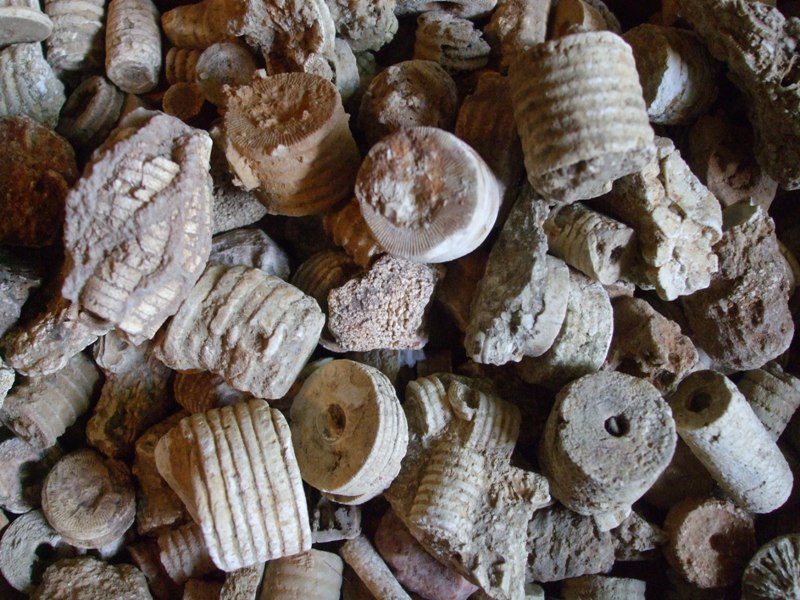
The small wooden treasure chest stored in my childhood closet holds a collection of fossilized sea animals that could be as old as 250 million years old. Whenever I’m home, I pull the heavy box from the shelf dumping the contents across my bedspread to find my favorites. My first few years out of high school, I was crazy about crinoids. I spent my days off of jobs at the local veterinary hospital and hardware store traipsing the shallow streams of southern Indiana with my dog, Kirby, searching for the columns of round “buttons.”
I know very little about fossils. But when I stumbled across my first crinoid while on a hike, I was drawn to their perfection. The stems of crinoids have a dependable shape; I trained my eye to find the fossilized discs interlocked tightly together like a stack of coins.
My crinoid collection wouldn’t wow the scholars. I have never found an entire specimen in 3-D relief. My treasure chest is full of bits and pieces – mostly chunks from the stems of individual crinoids. According to Crinoids and Blastoids by Susan H. Gray, ancient crinoids looked like flowers with roots, stems, and petals, but were actually sea animals that moved and gathered food. Thousands of different varieties of crinoids are now extinct, but several hundred still exist today. Modern crinoids, rarely seen by humans, are known as sea lillies and feather stars. All crinoids belong to the echinoderm group which includes modern animals such as sand dollars, sea stars, and sea urchins.
Indiana is a hot bed for spectactular crinoid finds. “The first crinoid calyx collected from the Crawfordsville, Indiana area was by 9-year old Horace Hovey in 1842, who was collecting ‘encrinites’ along the banks of Sugar Creek to sell,” www.fossilmuseum.net explains (and shows photographs of magnificently-preserved assemblages). When I pick a tiny fossilized stem from the siltstone, I can’t wait to get it home to show someone, anyone. I can just imagine young Horace’s excitement when he struck crinoid gold.
Crinoids became my specific obsession because they are one of the most commonly found fossils in the world. You can find crinoids everywhere – along roads, creeks, farmland, and mountainsides in many different states. The July 1953 addition of the Journal of Paleontology states, “thirty-two species of crinoids, distributed among 22 genera, are recognized in the Lodgepole (Mississippian, Kinderhookian) fauna of Montana.” This included the Little Belt Mountains, Big Snowy Mountains, and Tobacco Root Mountains.
Everytime my dog and I made the roadtrip to the dense forests of southern Indiana, I’d bring home at least a few fossils. We’d spend the day walking the watersheds, picnicing in the shade, and lounging in the grass, dozing off in the mid-day sun to the sounds of a rippling stream. My little treasure chest of fossils brings those memories rushing back. Fossils aren’t just about appreciating the vast and elaborate history leading up to “ME.” Searching for fossils is the perfect way to enjoy the present. Going on an outdoor adventure always puts me back into the place I need to be – the here and now.


By Karen Elizabeth Land — originally published in “The Great Falls Tribune” and “Kansas City Tribune,” January 2011.
A black-and-white photograph of my Grandpa Land posing with a shotgun in hand and cigar in his mouth along some nameless creek in a forest probably located somewhere in Indiana revealed a side of my grandfather I never knew.
“Grandpa hunted?” I asked my Aunt Dot when I discovered the photograph in a box of random possessions. Several years ago, I helped her clean out and sell their lifelong home.
“Oh, yeah… he loved to hunt with his buddies,” Dot replied like it was old news.
“What did he hunt?”
“Mostly squirrels and birds.”
A picture is worth a thousand words.
I cherish every old family photograph I find, knowing these single images are one more link to relatives long since passed. I like knowing Grandpa was a hunter. I like knowing he enjoyed the wilderness like I do. I like this photograph.
In another box days later, I discovered a tattered leather wallet bulging with paper and tied closed with twine. Grandpa kept all of his hunting licenses from the 1940s through 1950s. The handwriting and misspelled words on the documents are another rare treasure — Grandpa, who emigrated from Poland as a child, grew up as an orphan in Indianapolis and only had a few years of schooling. I study his signature and feel a trace of his spirit in the careful script.
The things that we leave behind pass along information to those who follow. I would know very little about my family if it weren’t for the photographs, newspaper articles, books, sheet music, record albums, and letters they stashed away throughout their lives.
Nowadays, real photographs are becoming rare. How many digital photos do you actually print to paper? The majority of pictures I’ve taken I view as images on a computer screen.
Boys and girls, it might be hard to believe but once upon a time, we had to develop film in a darkroom before we could take the negatives and print our photographs on paper just so we could look at the images. This physical process created tangible results and hand-held evidence of lives once lived, adventures once experienced.
Without hard-copy photographs to pass along, how will future generations learn about us?
Will your great grandchildren discover in a desk drawer one of your old thumb drives full of photos from that two-week backpacking trip you took in Glacier? And will thumb drives be obsolete when they finally do find it?
In 50 or 100 years, will little Susie run into her great-great aunt’s Facebook Page, and discover that her distant relative once loved horseback riding as much as she does? Will Facebook still exist in 50 or 100 years?
Will that digital photograph frame you got for Christmas live as long as you do? Is there an electronic device that isn’t disposable?
As handy as computers and smart phones and digital cameras are, it seems to me the safest way for images to survive through multiple generations will be in the form of real paper, not electronic gadgets. So much family history and information will be lost as technology advances and we fail to keep up.
I know what you’re thinking so go ahead and say it.
“Poor Karen, she’s totally old-school.”
I won’t argue. I use technology daily, yet I try to do it with care and caution. Instead of drooling over the latest hot device, I try to think of ways I can reduce these expensive and short-lived trappings from my life.
As I discover old family photographs, I scan them into my computer and make prints for the family. I try to go through my new pictures in IPhoto every few months and print the good ones, passing those out as well.
I don’t want to depend on a screen to enjoy my life, family, and friends.
I like real framed pictures, hanging on real log cabin walls.
The photo of my grandpa with his shotgun tells me that he was a hunter; a stack of hunting licenses means he was a devoted one.
Grandpa’s folders of sheet music reveals his love of ragtime; I always wondered what tunes he played on that banjo I now own.
My grandmother enjoyed the Hoosier poet, James Whitcomb Riley; she wrote “Return to Helen Land” inside every cover.
I cherish my great, great grandfather’s Civil War diary.
In the future, if most of our personal human artifacts are trapped inside of devices, buried in the endless muck and chatter of the Internet, hidden behind screens and passwords, how will our descendants stumble across and put together the puzzle pieces of our past?
That’s just me, wondering…


Thanks, Doug!
I’m devoted to my 1999 Toyota Rav 4 (a.k.a. “Ravioli”). The vehicle — basically just a big dog crate on wheels — has delivered my string thousands of miles across this country. Yesterday morning after I stacked my belongings and 3 dogs in their usual places, I popped the hood for a quick check of the fluids. I was horrified to discover an empty coolant reservoir. WHAT NEXT? I thought, knowing better than to say it out loud — I didn’t really want an answer. I dialed up Ravioli’s “doctor” and, as always, he answered the phone. “What’s up?” Doug said, knowing I must be stuck somewhere with a sick car. When I’m broken-down on the road, Doug rescues me with his knowledge by phone; when I’m stalled-out in Indiana, he’ll come looking for me. Thankfully, yesterday I could drive the Ravioli straight to his house for a consult. It didn’t take him long to find the problem, mend it with radiator stop-leak, and send us on our way. As I merged onto Interstate 74 WEST, I glanced down at my odometer, catching the numbers as they rolled to 266000. I love my little Ravioli…


 String of Dogs