
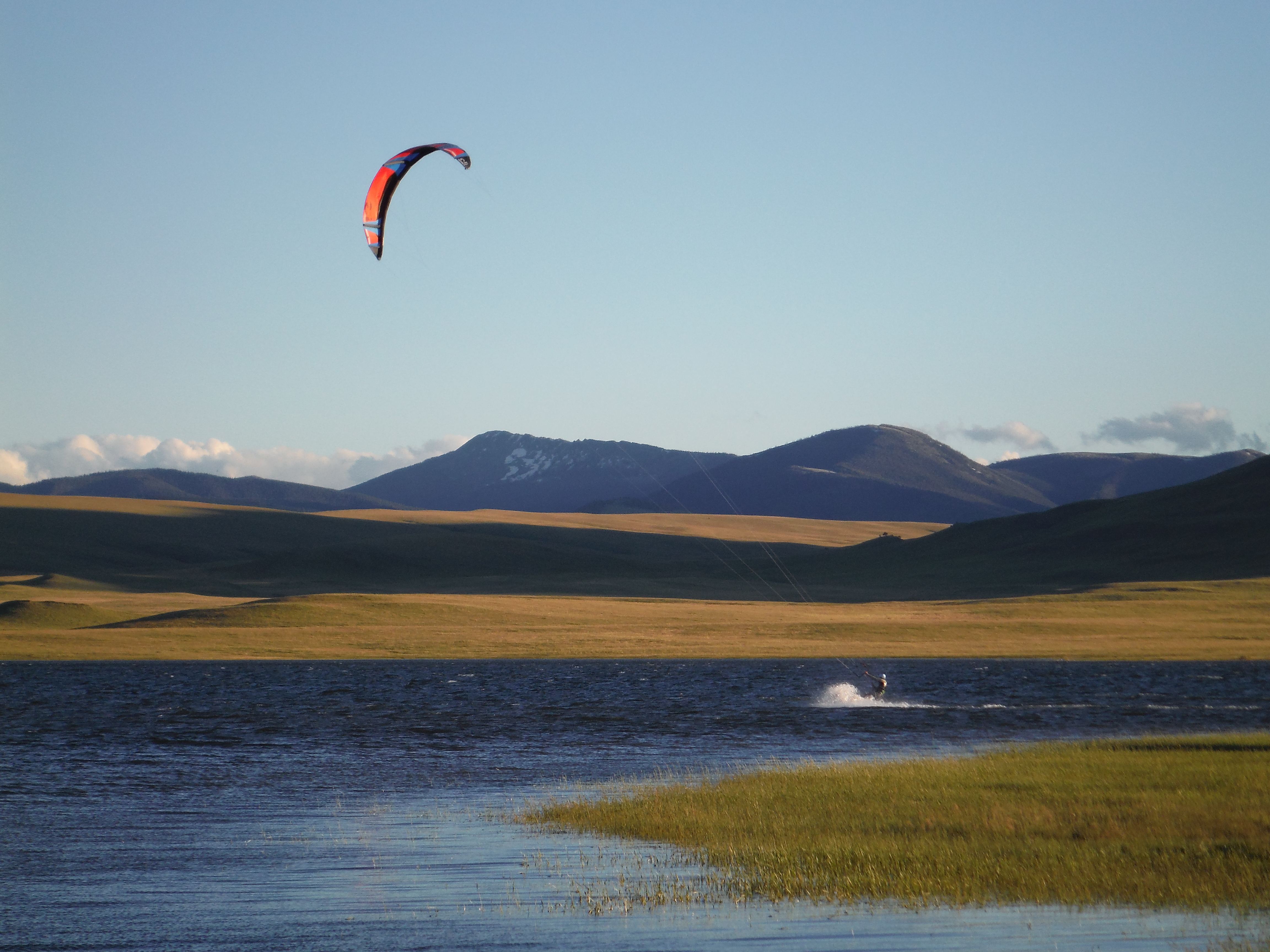
 A kiteboarder working the wind and water of Martinsdale Reservoir. Dancing with the elements — it’s so beautiful to watch…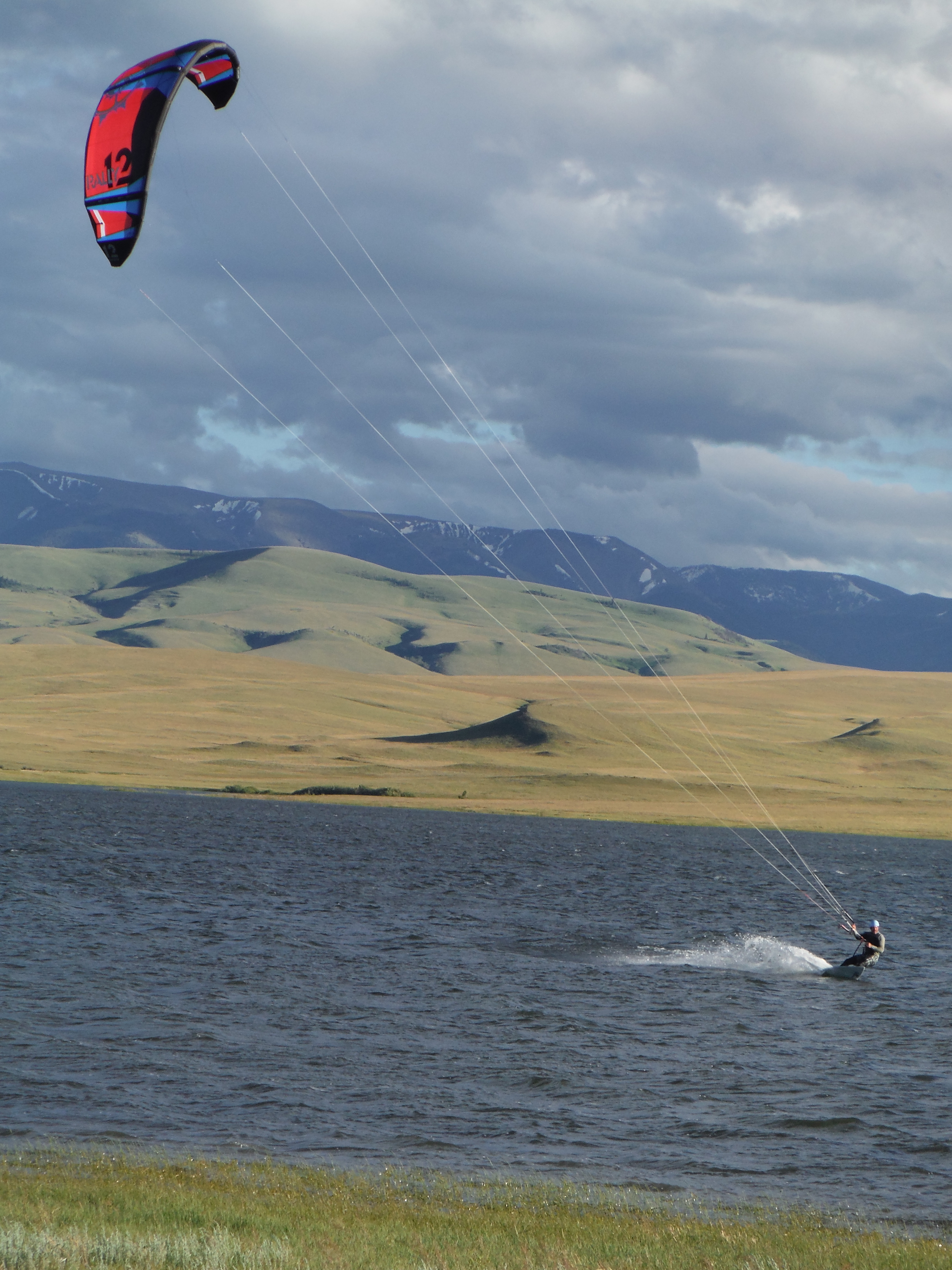
Monthly Archives: June 2014


Reason #3: To see what’s at the end of the road…
Share this:


On Monday, I took Lolo to the veterinarian. My instinct tells me that my 14-year old retired Iditarod lead dog is not “sick”, but continues to mourn the loss of her companion, Borage. And that her vomiting, acid reflux, and loss of appetite stem from grief and loneliness, not cancer or some other physical disease. Monday morning wasn’t much different than any other since I returned to Martinsdale 3 weeks ago — I fed Lolo just a small amount, she ate, howled for 20 minutes straight, and then vomited her breakfast back up. She looked miserable standing there in the front yard with her head hung low — so alone, and now so sick. I couldn’t put it off any longer. I needed an expert to confirm my diagnosis.
 I recognize the symptoms of a broken heart. In the last two years, I’ve lost both of my parents; my good friend and mentor, Carol Meeks; and my dog, Borage. I, myself, have struggled with a long list of ailments such as disturbing heart palpitations, interstitial cystitis, acid reflux, abdominal pain, ulcers, weight loss. These are real medical conditions causing great discomfort. And I won’t deny that I often feel sad, anxious, and alone just like Lolo does. But how do you separate despair and disease? Thankfully, I have the human ability to talk it all through with medical doctors and therapists, and then come up with a plan that can be adjusted along the way. But how do you help a grieving animal?
In my parents’ living room in Indianapolis, a framed print hangs above their couch depicting a dog greeting passengers unloading from a train. My parents loved dogs, trains, and Montana so when we visited Fort Benton in 2001, all three of us were drawn to the story of “Shep.”
According to historians from the Overholser Historical Research Center and the Missoulian, “Shep first appeared in Fort Benton in August 1936 when his owner, an area sheepherder whose name has been lost to history, was brought mortally ill to the St. Clare Hospital. After the sheepherder passed, his body was sent by train to his family back east. Shep was left behind, but for the next 5 1/2 years he lived under the platform of the Fort Benton train station, patiently waiting for his long-dead master to return.”
I think of “Shep” now as I watch Lolo out in the yard, pacing back and forth in front of the gate. The day I realized it was time to end Borage’s suffering and put him to sleep, my lifelong friend (and veterinarian), Dr. Shannon Kiley, suggested that I bring Lolo with me so she could see and smell his body before they took him away. We all knew Lolo would be lost without Borage, but we hoped this might help. I did as Shannon said and allowed Lolo to sniff her mate’s thick fur for one last time.
Sometimes witnessing the death of a loved one still isn’t enough proof that he or she is truly gone. I often wake in the mornings and feel for a brief moment that my parents and Carol and Borage are still here. For humans and dogs, long-term grief thrashes the body with highs and lows. One minute I might finally feel some peace — but then out of nowhere sadness slams me hard from a new direction. I cry. Lolo howls. Sometimes we do it together.
Dr. Katherine Parks, my Montana veterinarian based in Harlowton, declared Lolo to be in amazing physical shape for a 14-year old dog. “She’s so nervous, yet her heart rate is really low,” Dr. Parks noted, impressed with the athletic physiology of Alaskan Husky sled dogs. The thorough exam revealed nothing — the blood work came back perfect. “I would start her on a famotidine for her stomach acid problem. And for her nerves, you could try some anti-anxiety meds. Or try to find her a new friend,” Dr. Parks suggested. “One or all of these things might help… or not.”
 In other words, you can never replace a loved one. But for me, continuing to live means continuing to try — I’m not giving up on Lolo. I cry. She howls. We both take Pepcid twice a day. And then we take a hike… our doctors’ orders.
Share this:

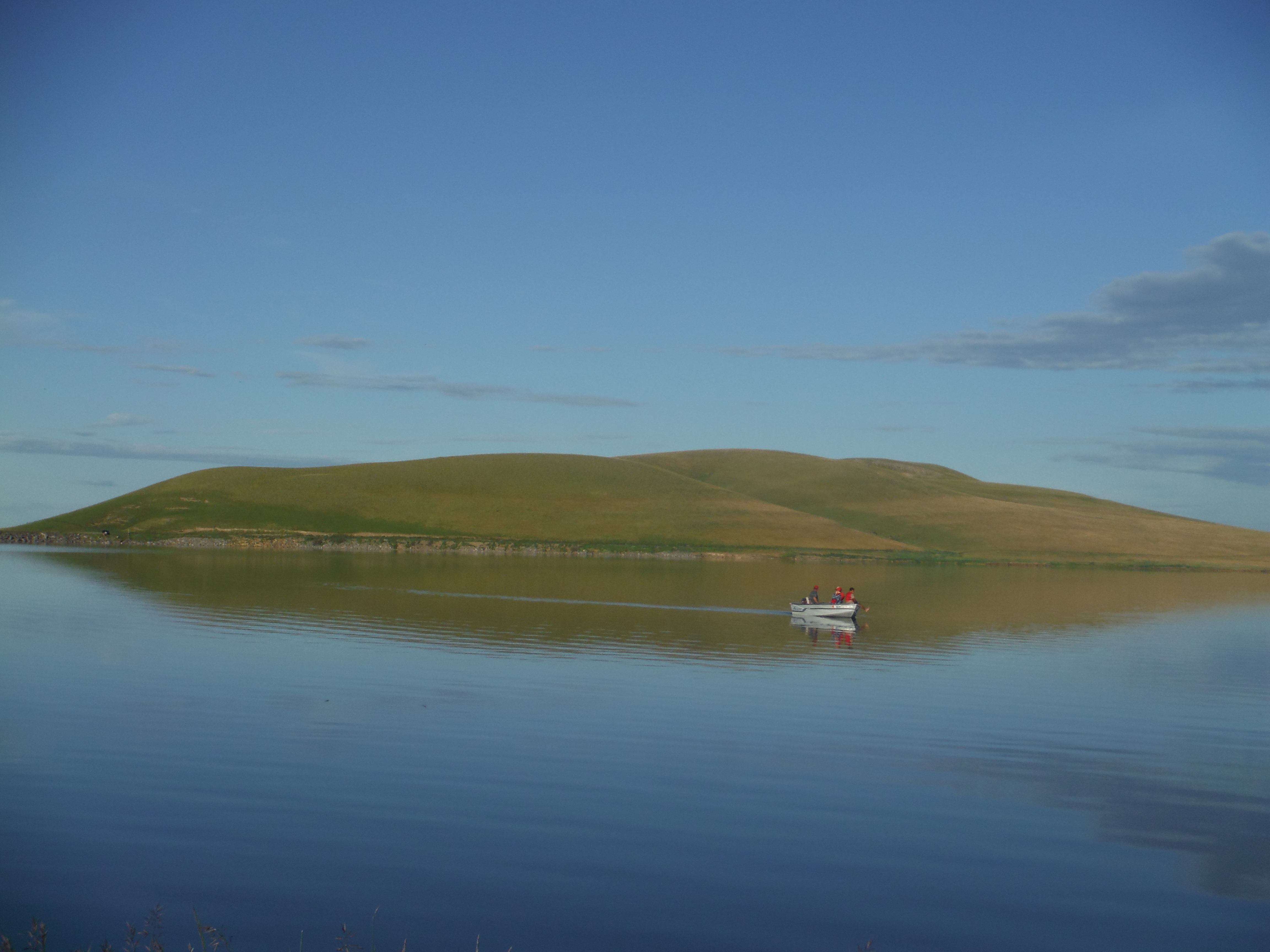 Reason #2: Reflection…
… Reflection…
 … Reflection.
Share this:


Share this:

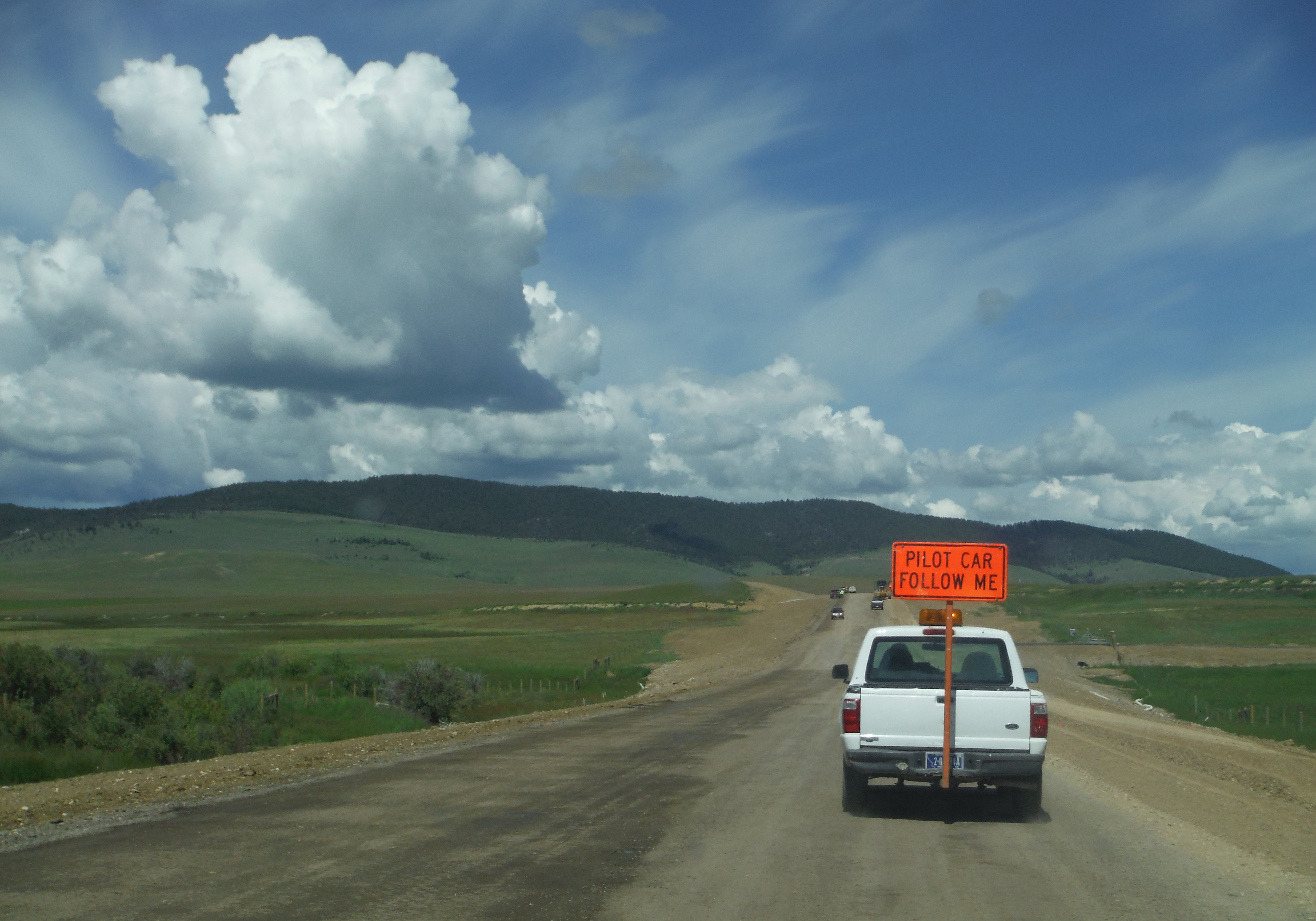 There’s something very reassuring about a pilot car…
Share this:

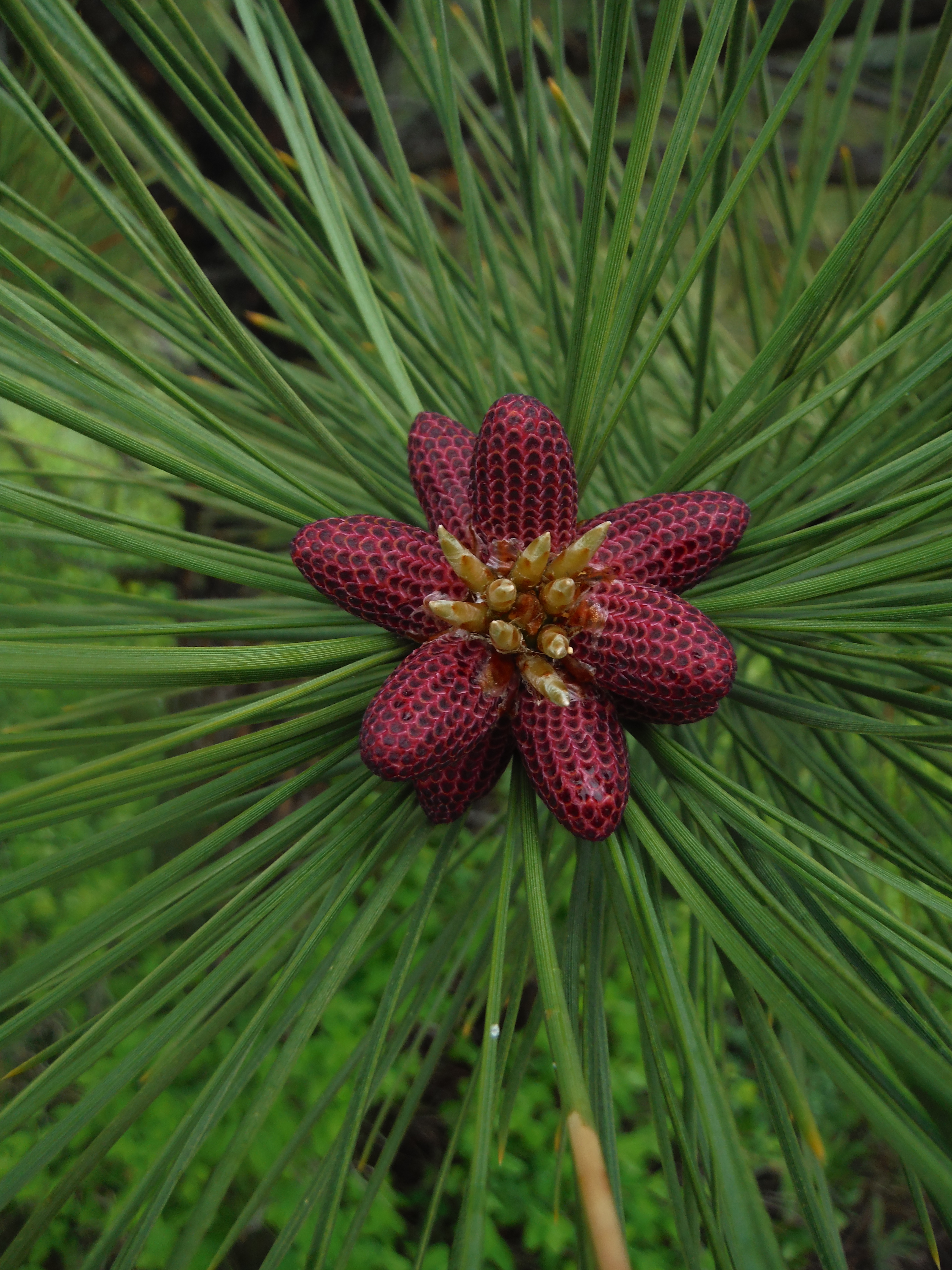 Reason #1: Every single day, we discover little gems.
Share this:


Chloe (left) and Jigs lead the 2014 summer solstice hike up Pasture Gulch.
In August 2011, I stopped letting Borage, Jigs, Chloe, and Lolo run free. To many, this might not seem like a big deal. Deciding to walk your dogs on leashes instead of allowing them to run wild… who cares? But in my life, the decision to restrain my dogs, snapping long extended leads to their collars before each and every hike, marked a major shift in how I navigate life. It all boiled down to one emotion — fear. I was terrified. That summer, both of my parents were dying in front of me. Together, we had already endured a year of cancer, but nothing was going right. Surgeries, chemotherapy, radiation, infections, middle-of-the-night ER visits — if one more bad thing happened to someone I love, I feared I wouldn’t be able to take it.
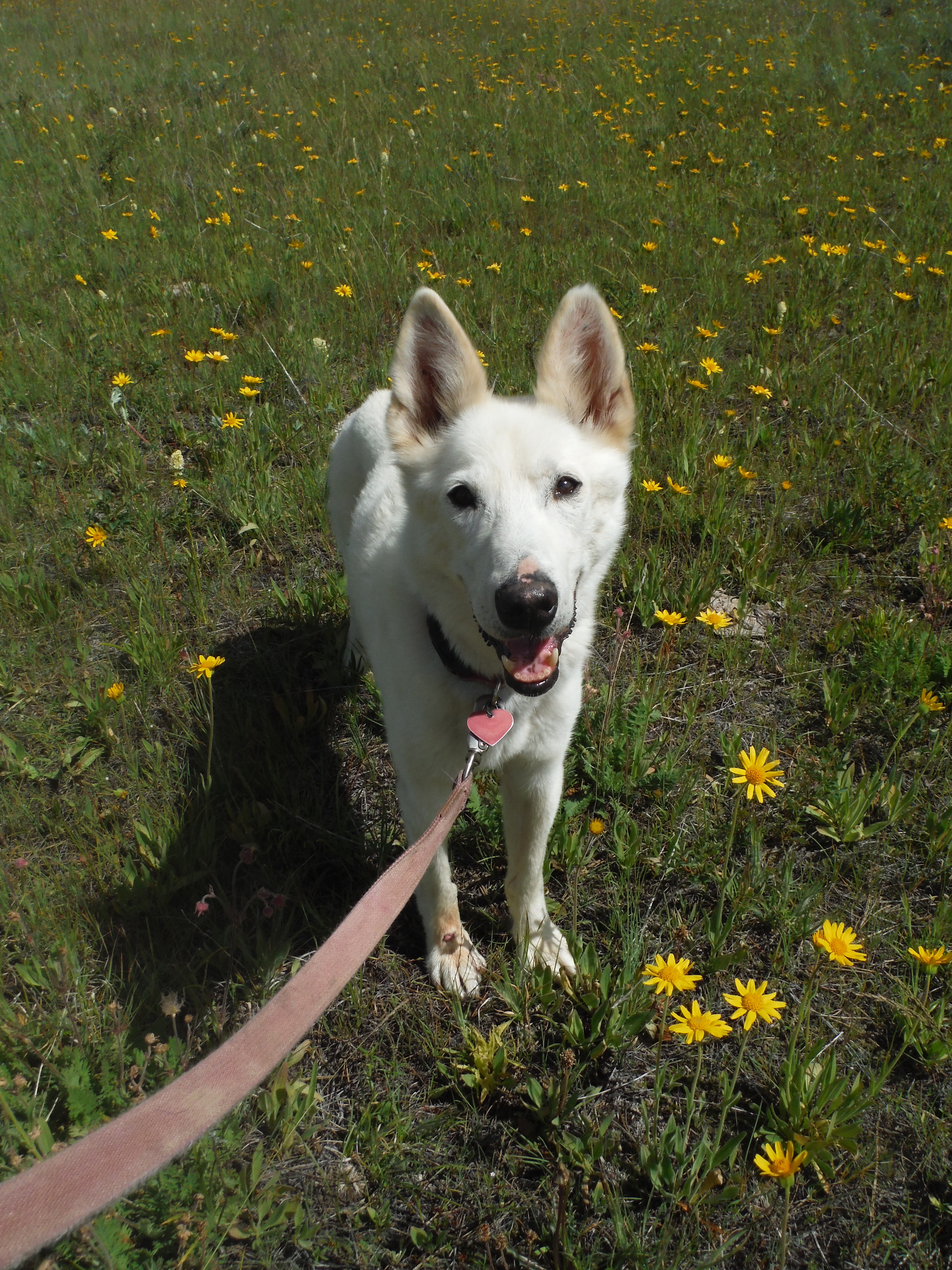
Lolo, my once-Iditarod-lead-dog, now known as my white shadow.
I could be my parents’ constant caregivers, but I could not stop disease from ravaging their bodies. I longed for control — of anything. By making my dogs walk close at my side, I could prevent them from getting lost in the woods or hurt by a wild animal. I could keep them from being swept away by a swollen river. Before my parents became ill, one of my main joys was allowing my dogs to be dogs. I would arrive at a trailhead and open every car door, releasing them to the wilderness. Exploring forests, chasing critters, swimming in clear Montana waters — for 20 years, I cherished those pure moments with all of my dogs (Kirby, Rosa, Adeline, Borage, Jigs, Chloe, Lolo… and dozens more sled dogs).
Knowing what I now know, how do I go back? How do I calm the what if’s? How do I let go of those I love? I think, just maybe, some of the answers might be in the dogs themselves. Jigs, Chloe, and Lolo continue to drag me on down the trail, reminding me that life is not experienced in the later… but in the now. And that the best kind of love happens when you let go of the leash. Thankfully, they’re patient.
Share this:

 This last Monday as I was leaving Helena to drive back to Martinsdale, I noticed two young men walking single file along US 12-East headed for Townsend. It was almost 5 pm. Dark clouds churned overhead. The hikers pushed “strollers” marked with orange safety flags. They were leaving town at a good clip, moving with confidence into some BIG and wild Montana country. Seeing them, I felt pangs of both nostalgia and longing. I want to be walking with them… I thought.
Five days later, I looked out my kitchen window and discovered the same pair of hikers rolling into Martinsdale. I knew they were headed my way — my neighbor had heard through the grapevine that the two 19-year old Washington State University students were walking across the United States, from Seattle to New York City, raising money for the Seattle Childrens’ Hospital. She also said they’d be passing through our tiny town any day now.
I met Cameron Coupe and Zan Roman as they walked past my house, and I offered them a place to stay. They parked their strollers in my garage, and then took off on their skateboards to explore the town of Martinsdale. We went out to dinner at the Crazy Mountain Inn. At my house, they did laundry, took showers, wrote in their journals at my kitchen table, and crashed for the night in my living room. They fell asleep listening to the Harry Potter series-on-tape, playing the book out loud over a miniature speaker they carried with them.

A roadside find turned hikers’ mascot…
After spending months hiking on the Appalachian Trail with my dog, Kirby, and friend, Maureen, I know what it feels like to take a very long walk. Cross-country hikers can only go as fast as their legs will work. Their main focus in a day is getting from point A to point B. They carry their whole lives on their backs (or in strollers). And they are quite happy people. Hosting these two young adventurers brought back all of those feelings, and many great memories. Countless people helped us during our hike (we called them “trail angels”) — I was thrilled to pay forward the generosity of those strangers who quickly became our true friends.
If you see two young men zooming down a hill into your town on skateboards, pushing strollers pull of gear in front of them, that’s probably Cameron and Zan just passing through… offer them a place to stay and some grub and you won’t regret it. They’re great company…

Headed east…
Happy trails, Cameron and Zan!
Follow their progress at http://www.walkforseattlechildrens.com/
Share this:

The Martinsdale Reservoir outhouse is always open for business…
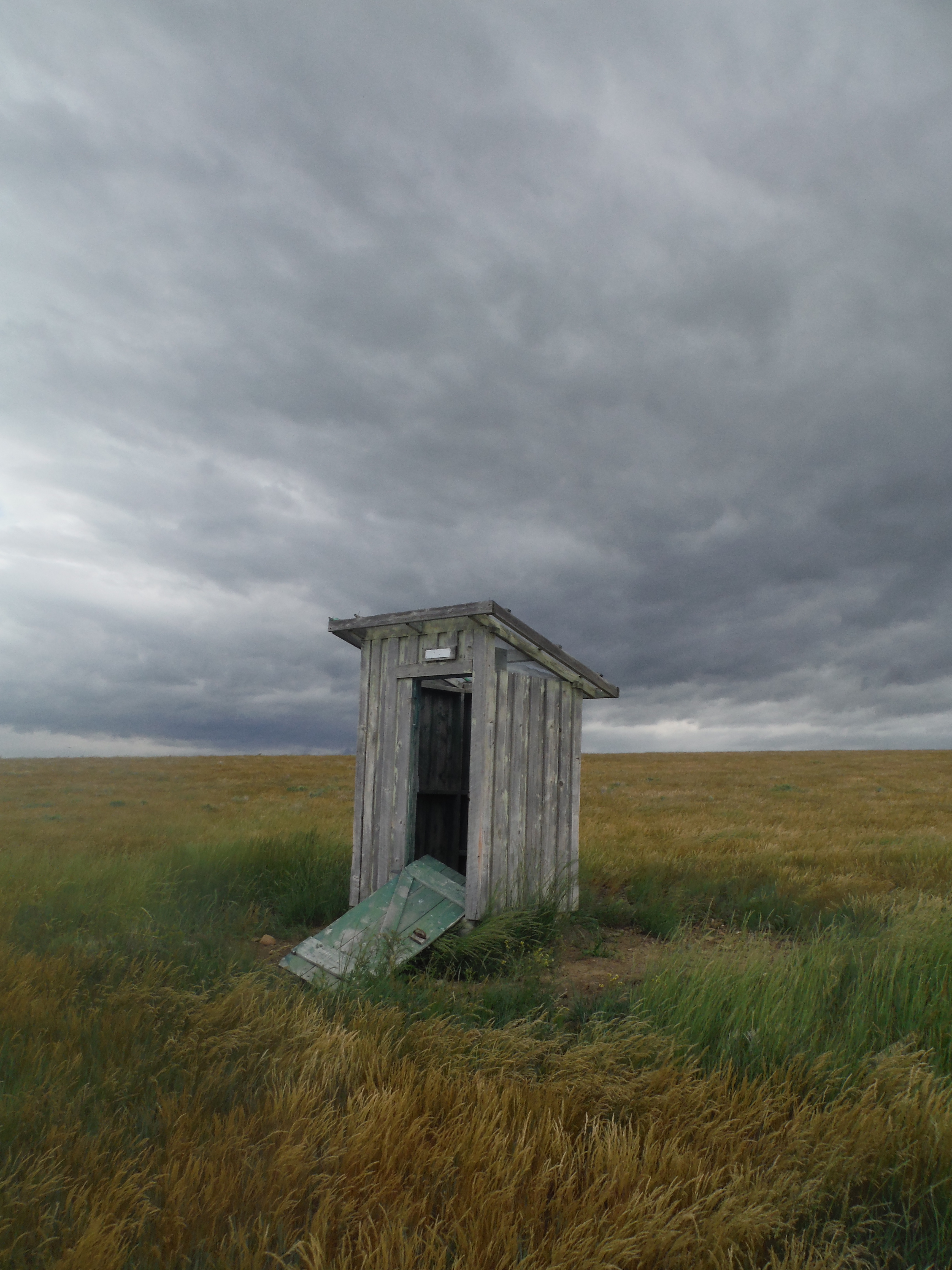
A morning visit to the outhouse…
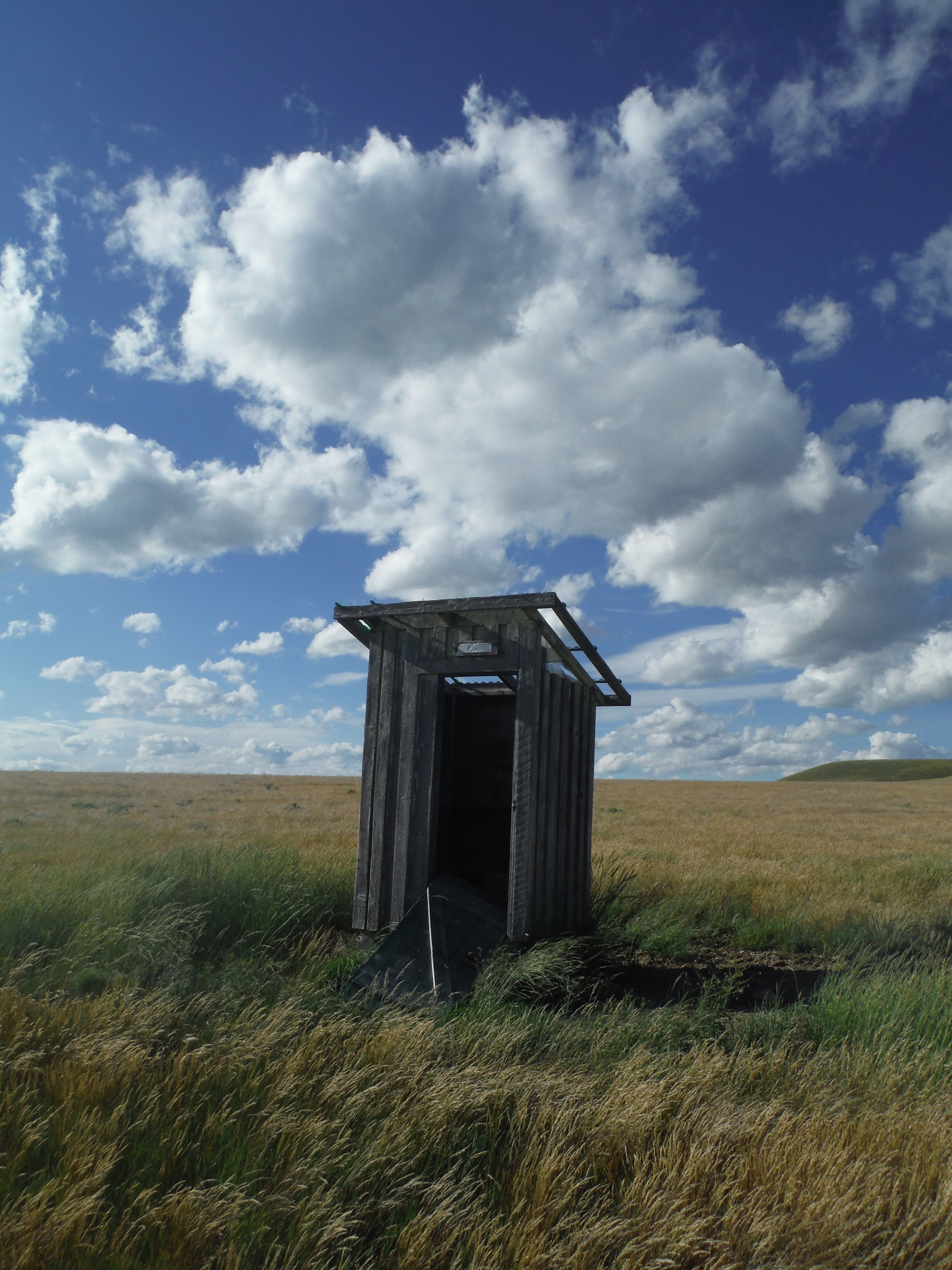
An afternoon visit to the same outhouse…

 String of Dogs